
Loss of Taste, Loss of Smell
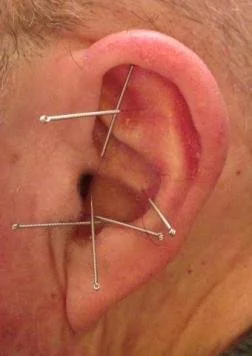
In treating loss of taste/loss of smell Lok-Kwan uses a ear-acupuncture protocol that he learned from Dr. Niemtzow and he has had many successes with it.
He has treated more than a dozen patients with this protocol now with great results - over 80% complete recovery. Usually three to six closely spaced treatments do the job. Here's a testimonial from one of the patients:
"I received a three session protocol from Lok Kwan Cheng to restore my sense of taste which was much impaired for many years. Long a 'happy' eater, I was missing the tastes I'd grown up with. The acupuncture worked for me, and mealtime is once again 'happy'." - Jim H
The chemical senses of smell and taste are vital for both safety and quality of life. Anosmia is the total loss of smell, while ageusia refers specifically to the rare inability of the tongue to detect basic tastes: sweet, sour, bitter, salty, and umami. Most perceived "flavor" loss is actually due to impaired retronasal olfaction—the process of odor molecules reaching the nose from the back of the mouth during eating. Flavor is a complex "equation" combining taste, smell, texture (mouthfeel), and even sound.
Sensory dysfunction frequently results from COVID-19, head trauma, or chronic rhinosinusitis with nasal polyps, where inflammation can damage sensory neurons. Biologically, the olfactory bulb serves as the first relay center for smell. Its volume naturally decreases with age, but significant atrophy can serve as an early biomarker for neurodegenerative diseases like Parkinson’s and Alzheimer’s.